
Combat atlas · 18 type records
PokéSurvivor Types
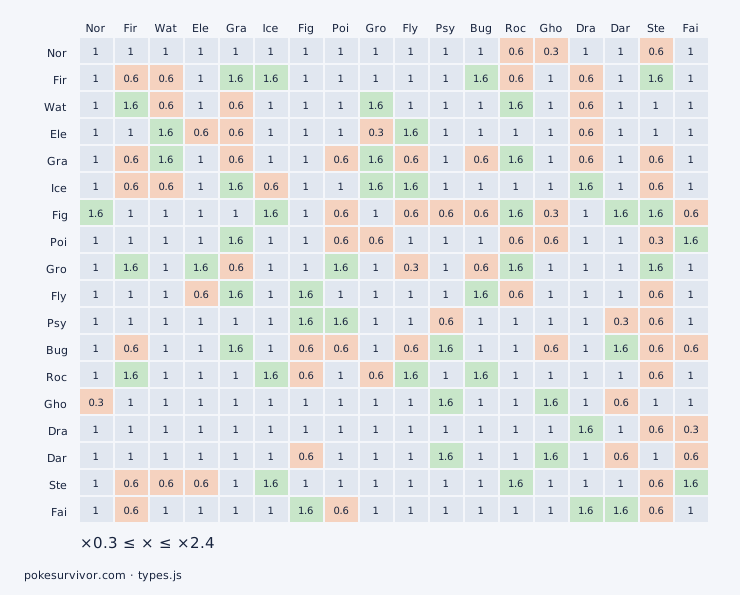
PokéSurvivor uses 18 types with softened damage matchups: a single super-effective matchup is ×1.6, resistance is ×0.6, and a main-series immunity becomes ×0.3. Neutral matchups stay at ×1. For a defender with two types, multiply the two contributions and clamp the result to ×0.3–×2.4. Read attacks across the chart and defending types down its columns. Open a type record to find its complete incoming and outgoing values, matching partners, base moves and arena theme. These values describe the type factor in combat; they are not a complete damage or DPS rating.
The full type directory
Check both offensive advantages and defensive weaknesses for each type. Partner counts include a dual-type partner under both of its types, so adding this column does not produce the roster total. Move counts refer to the 64 base moves, including buffs, rather than their evolved forms.
| Type | Arena theme | Base moves | Partners |
|---|---|---|---|
| Normal | Eternal Meadow | 8 | 120 |
| Fire | Igneous Volcano | 6 | 76 |
| Water | Sea Grotto | 5 | 149 |
| Electric | Volt Plant | 3 | 64 |
| Grass | Emerald Jungle | 4 | 118 |
| Ice | Eternal Glacier | 3 | 46 |
| Fighting | Ancient Dojo | 2 | 68 |
| Poison | Toxic Swamp | 4 | 78 |
| Ground | Red Desert | 4 | 70 |
| Flying | Sky Peak | 3 | 102 |
| Psychic | Mind Temple | 4 | 96 |
| Bug | Hive Forest | 3 | 89 |
| Rock | Ancient Quarry | 2 | 66 |
| Ghost | Gloomy Graveyard | 3 | 60 |
| Dragon | Dragon Sanctuary | 2 | 67 |
| Dark | Dark Alley | 3 | 60 |
| Steel | Steel Fortress | 3 | 61 |
| Fairy | Enchanted Forest | 2 | 62 |
Attack rows, defender columns
Use the move’s attack type for the row. Each column is one defending type; combine two columns when the defender has two types. Every cell is the actual softened game value, including the ×0.3 matchups that would be immunities in the main-series chart.
The chart scrolls horizontally on smaller screens. Type names in both axes link to their full records.
| Type | Normal | Fire | Water | Electric | Grass | Ice | Fighting | Poison | Ground | Flying | Psychic | Bug | Rock | Ghost | Dragon | Dark | Steel | Fairy |
|---|---|---|---|---|---|---|---|---|---|---|---|---|---|---|---|---|---|---|
| Normal | ×1 | ×1 | ×1 | ×1 | ×1 | ×1 | ×1 | ×1 | ×1 | ×1 | ×1 | ×1 | ×0.6 | ×0.3 | ×1 | ×1 | ×0.6 | ×1 |
| Fire | ×1 | ×0.6 | ×0.6 | ×1 | ×1.6 | ×1.6 | ×1 | ×1 | ×1 | ×1 | ×1 | ×1.6 | ×0.6 | ×1 | ×0.6 | ×1 | ×1.6 | ×1 |
| Water | ×1 | ×1.6 | ×0.6 | ×1 | ×0.6 | ×1 | ×1 | ×1 | ×1.6 | ×1 | ×1 | ×1 | ×1.6 | ×1 | ×0.6 | ×1 | ×1 | ×1 |
| Electric | ×1 | ×1 | ×1.6 | ×0.6 | ×0.6 | ×1 | ×1 | ×1 | ×0.3 | ×1.6 | ×1 | ×1 | ×1 | ×1 | ×0.6 | ×1 | ×1 | ×1 |
| Grass | ×1 | ×0.6 | ×1.6 | ×1 | ×0.6 | ×1 | ×1 | ×0.6 | ×1.6 | ×0.6 | ×1 | ×0.6 | ×1.6 | ×1 | ×0.6 | ×1 | ×0.6 | ×1 |
| Ice | ×1 | ×0.6 | ×0.6 | ×1 | ×1.6 | ×0.6 | ×1 | ×1 | ×1.6 | ×1.6 | ×1 | ×1 | ×1 | ×1 | ×1.6 | ×1 | ×0.6 | ×1 |
| Fighting | ×1.6 | ×1 | ×1 | ×1 | ×1 | ×1.6 | ×1 | ×0.6 | ×1 | ×0.6 | ×0.6 | ×0.6 | ×1.6 | ×0.3 | ×1 | ×1.6 | ×1.6 | ×0.6 |
| Poison | ×1 | ×1 | ×1 | ×1 | ×1.6 | ×1 | ×1 | ×0.6 | ×0.6 | ×1 | ×1 | ×1 | ×0.6 | ×0.6 | ×1 | ×1 | ×0.3 | ×1.6 |
| Ground | ×1 | ×1.6 | ×1 | ×1.6 | ×0.6 | ×1 | ×1 | ×1.6 | ×1 | ×0.3 | ×1 | ×0.6 | ×1.6 | ×1 | ×1 | ×1 | ×1.6 | ×1 |
| Flying | ×1 | ×1 | ×1 | ×0.6 | ×1.6 | ×1 | ×1.6 | ×1 | ×1 | ×1 | ×1 | ×1.6 | ×0.6 | ×1 | ×1 | ×1 | ×0.6 | ×1 |
| Psychic | ×1 | ×1 | ×1 | ×1 | ×1 | ×1 | ×1.6 | ×1.6 | ×1 | ×1 | ×0.6 | ×1 | ×1 | ×1 | ×1 | ×0.3 | ×0.6 | ×1 |
| Bug | ×1 | ×0.6 | ×1 | ×1 | ×1.6 | ×1 | ×0.6 | ×0.6 | ×1 | ×0.6 | ×1.6 | ×1 | ×1 | ×0.6 | ×1 | ×1.6 | ×0.6 | ×0.6 |
| Rock | ×1 | ×1.6 | ×1 | ×1 | ×1 | ×1.6 | ×0.6 | ×1 | ×0.6 | ×1.6 | ×1 | ×1.6 | ×1 | ×1 | ×1 | ×1 | ×0.6 | ×1 |
| Ghost | ×0.3 | ×1 | ×1 | ×1 | ×1 | ×1 | ×1 | ×1 | ×1 | ×1 | ×1.6 | ×1 | ×1 | ×1.6 | ×1 | ×0.6 | ×1 | ×1 |
| Dragon | ×1 | ×1 | ×1 | ×1 | ×1 | ×1 | ×1 | ×1 | ×1 | ×1 | ×1 | ×1 | ×1 | ×1 | ×1.6 | ×1 | ×0.6 | ×0.3 |
| Dark | ×1 | ×1 | ×1 | ×1 | ×1 | ×1 | ×0.6 | ×1 | ×1 | ×1 | ×1.6 | ×1 | ×1 | ×1.6 | ×1 | ×0.6 | ×1 | ×0.6 |
| Steel | ×1 | ×0.6 | ×0.6 | ×0.6 | ×1 | ×1.6 | ×1 | ×1 | ×1 | ×1 | ×1 | ×1 | ×1.6 | ×1 | ×1 | ×1 | ×0.6 | ×1.6 |
| Fairy | ×1 | ×0.6 | ×1 | ×1 | ×1 | ×1 | ×1.6 | ×0.6 | ×1 | ×1 | ×1 | ×1 | ×1 | ×1 | ×1.6 | ×1.6 | ×0.6 | ×1 |
Four dual-type examples
These calculations multiply the chart values before applying the official cap. They show why checking only a defender’s first type can give the wrong answer.
Choose attacks and defensive partners separately
Outgoing matchups answer what a move’s type does to an enemy. Incoming matchups answer what enemy attack types do to your partner. The chart is directional: reversing two types can change the value. For example, Fire attacks are ×1.6 against Grass, while Grass attacks are ×0.6 against Fire. Check outgoing coverage and incoming risk independently before choosing your active attack.
Use the actual attack type rather than treating the partner’s name or rarity as the damage input. The game uses these factors for both player and enemy attacks; incoming damage uses the enemy's primary type or its projectile's type. A dual-type partner contributes both defending types. Being resistant to one side of a matchup can be cancelled by weakness on the other side.
Compare the partners and moves available to a type before planning your coverage. A large partner pool does not establish a stronger type, and a move count does not count how often those attacks land. Open a partner record to see its starting move and full learnset before planning coverage. A listed buff belongs to a type’s base-move pool but is not a direct damage attack.
Multiply first, then apply the floor and ceiling
For two defending types, multiply the row’s two values without replacing them with the main-series factors. Two super-effective contributions give 1.6 × 1.6 = 2.56, which becomes ×2.4 after the ceiling. Two resistances give 0.6 × 0.6 = 0.36 and remain ×0.36 because that result is above the floor. A resisted contribution combined with a softened immunity gives 0.18, which becomes ×0.3.
A weakness and a resistance combine to 1.6 × 0.6 = 0.96. That is slightly below neutral rather than exactly ×1. The game labels damage super effective above 1.05 and weak below 0.95, so ×0.96 receives neither label. Keep the numeric factor in mind even when the game’s feedback does not announce an advantage or resistance.
The lower bound also means a softened immunity never makes the type factor zero. Electric attacks into a Ground/Flying defender combine ×0.3 against Ground with ×1.6 against Flying, giving ×0.48. They remain usable but disadvantaged. This is why carrying over an absolute immunity assumption can cause a poor attack choice in a survivor run.
Weather modifies damage after the type clamp
Weather is a separate multiplier applied after the type product is clamped. At full intensity, sun boosts Fire to ×1.5 and reduces Water to ×0.5. Rain boosts Water to ×1.5 and Electric to ×1.2 while reducing Fire to ×0.5. Sand boosts Rock, Ground and Steel to ×1.3; snow boosts Ice to ×1.5; fog boosts Ghost, Fairy and Psychic to ×1.3.
A Fire type factor already capped at ×2.4 becomes ×3.6 under full-intensity sun because the weather multiplier comes afterward. The ×2.4 ceiling belongs to type effectiveness, not the final weather-adjusted factor. Weather fades over three seconds at its boundaries, so the full-intensity numbers describe the middle of an active weather period rather than every instant.
The arena theme in a type record describes a rift environment associated with that type. Its liquid and forced-weather fields help you prepare for that encounter; they do not identify a fixed overworld location where every partner of that type can be found. A dual-type rift opponent can appear in either of its types' arena themes.
Turn a matchup into a run plan
Start with a partner you own, inspect its starting move, then check its learnable moves for another attack type that covers an unfavorable matchup. A move’s base damage and cooldown are only part of that choice: behavior, projectiles, hit geometry and contact time affect how much damage reaches an enemy. Do not rank the whole move pool by multiplying one damage number by a type cell.
Before entering a legendary arena, read that target’s two types and encounter behavior. Check outgoing coverage for the attacks you already have and incoming risk for the partner you are controlling. If you are hunting a shiny, remember that the shiny enemy’s extra HP extends the fight while the same type chart still applies. Use the guide for movement and move-evolution preparation, then return to the relevant type record for the exact matchup.