
Combat field guide · 64 base moves
PokéSurvivor Moves
Find a move by its name, type or behavior, then open its record for all five levels and the partners that can learn it. PokéSurvivor has 64 base moves across 15 behavior families. Five are buffs without direct damage or move evolutions; the other 59 have an evolution condition. Your active move group attacks automatically. Separate inactive slots do not all fire at once, so the attack you select matters as much as the moves you have collected.
The complete base-move directory
The damage and cooldown columns show level-one values before partner stats, run upgrades, held items, type matchups or weather. A buff has no direct damage value. Learner counts include every partner whose types allow the move. Every name opens a full move record, including its upgrade track, evolution condition and learning partners. Search also matches the evolved move name and required stat card.
| Move | Type | Behavior | Base damage | Cooldown (s) | Learners | Evolution · required card |
|---|---|---|---|---|---|---|
| Tackle | Normal | Melee | 16 | 0.5 | 966 | Take Down · Vigor |
| Quick Attack | Normal | Dash | 20 | 0.75 | 966 | Extreme Speed · Sprint |
| Swords Dance | Normal | Buff | Buff · no damage | 0.85 | 966 | No evolution |
| Agility | Normal | Buff | Buff · no damage | 0.85 | 966 | No evolution |
| Harden | Normal | Buff | Buff · no damage | 0.85 | 966 | No evolution |
| Ember | Fire | Projectile | 18 | 0.52 | 76 | Fire Blast · Power |
| Flamethrower | Fire | Cone | 7 | 0.7 | 76 | Overheat · Reflexes |
| Fire Spin | Fire | Orbit | 14 | 0.3 | 76 | Sacred Fire · Synthesis |
| Heat Wave | Fire | Nova | 13 | 1.25 | 76 | Eruption · Vigor |
| Water Gun | Water | Projectile | 14 | 0.44 | 149 | Scald · Power |
| Bubble | Water | Nova | 9 | 1 | 149 | Surf · Sprint |
| Hydro Pump | Water | Beam | 29 | 1.5 | 149 | Hydro Cannon · Power |
| Aqua Ring | Water | Buff | Buff · no damage | 0.9 | 149 | No evolution |
| Vine Whip | Grass | Melee | 19 | 0.62 | 118 | Power Whip · Power |
| Razor Leaf | Grass | Boomerang | 10 | 0.9 | 118 | Leaf Storm · Reflexes |
| Petal Blizzard | Grass | Orbit | 14 | 0.26 | 118 | Petal Dance · Synthesis |
| Grass Knot | Grass | Aura | 9 | 0.55 | 118 | Frenzy Plant · Vigor |
| Thunder Shock | Electric | Projectile | 13 | 0.4 | 64 | Thunder · Power |
| Discharge | Electric | Aura | 8 | 0.45 | 64 | Electric Terrain · Armor |
| Thunderbolt | Electric | Chain | 21 | 0.95 | 64 | Zap Cannon · Reflexes |
| Confusion | Psychic | Projectile | 13 | 0.58 | 96 | Psyshock · Reflexes |
| Psybeam | Psychic | Beam | 17 | 1.15 | 96 | Future Sight · Power |
| Psychic | Psychic | Nova | 10 | 1.35 | 96 | Expanding Force · Magnet |
| Sludge | Poison | Projectile | 17 | 0.6 | 78 | Sludge Bomb · Power |
| Mud Shot | Ground | Nova | 11 | 1.1 | 70 | Earth Power · Power |
| Gust | Flying | Orbit | 13 | 0.26 | 102 | Hurricane · Sprint |
| Wing Attack | Flying | Melee | 17 | 0.55 | 102 | Brave Bird · Power |
| Body Slam | Normal | Melee | 36 | 0.95 | 966 | Giga Impact · Power |
| Hyper Voice | Normal | Nova | 12 | 1.15 | 966 | Uproar · Reflexes |
| Poison Sting | Poison | Projectile | 8 | 0.34 | 78 | Poison Jab · Sprint |
| Toxic | Poison | Trail | 6 | 0.3 | 78 | Poison Gas · Synthesis |
| Bulldoze | Ground | Aura | 11 | 0.7 | 70 | Earthquake · Power |
| Bug Bite | Bug | Melee | 13 | 0.42 | 89 | X-Scissor · Power |
| String Shot | Bug | Mine | 14 | 1.1 | 89 | Sticky Web · Reflexes |
| Bug Buzz | Bug | Aura | 8 | 0.45 | 89 | Swarm · Synthesis |
| Rock Throw | Rock | Projectile | 24 | 0.7 | 66 | Stone Edge · Power |
| Rock Slide | Rock | Meteor | 21 | 1.3 | 66 | Stealth Rock · Reflexes |
| Ice Beam | Ice | Beam | 20 | 1.1 | 46 | Blizzard · Power |
| Powder Snow | Ice | Aura | 8 | 0.55 | 46 | Icy Wind · Sprint |
| Karate Chop | Fighting | Melee | 22 | 0.5 | 68 | Close Combat · Power |
| Aura Sphere | Fighting | Projectile | 17 | 0.62 | 68 | Focus Blast · Reflexes |
| Lick | Ghost | Melee | 14 | 0.48 | 60 | Shadow Punch · Power |
| Shadow Ball | Ghost | Projectile | 19 | 0.66 | 60 | Phantom Force · Reflexes |
| Dragon Rage | Dragon | Beam | 24 | 1 | 67 | Draco Meteor · Power |
| Dragon Dance | Dragon | Buff | Buff · no damage | 0.7 | 67 | No evolution |
| Fairy Wind | Fairy | Nova | 11 | 1 | 62 | Moonblast · Power |
| Dazzling Gleam | Fairy | Aura | 9 | 0.5 | 62 | Misty Terrain · Synthesis |
| Metal Claw | Steel | Melee | 18 | 0.5 | 61 | Iron Head · Power |
| Flash Cannon | Steel | Beam | 23 | 1.05 | 61 | Steel Beam · Armor |
| Bite | Dark | Melee | 17 | 0.45 | 60 | Crunch · Power |
| Dark Pulse | Dark | Nova | 14 | 1.15 | 60 | Snarl · Sprint |
| Night Shade | Dark | Aura | 9 | 0.5 | 60 | Nightmare · Synthesis |
| Bonemerang | Ground | Boomerang | 16 | 0.95 | 70 | Bone Rush · Power |
| Psycho Cut | Psychic | Boomerang | 9 | 0.8 | 96 | Psychic Fangs · Reflexes |
| Spikes | Ground | Mine | 18 | 1.2 | 70 | Fissure · Power |
| Toxic Spikes | Poison | Mine | 11 | 1.1 | 78 | Gunk Shot · Synthesis |
| Hail | Ice | Meteor | 18 | 1.2 | 46 | Avalanche · Reflexes |
| Meteor Mash | Steel | Meteor | 34 | 1.4 | 61 | Magnet Bomb · Power |
| Will-O-Wisp | Fire | Turret | 15 | 3.5 | 76 | Inferno · Reflexes |
| Substitute | Normal | Turret | 14 | 4 | 966 | Double Team · Armor |
| Aerial Ace | Flying | Dash | 18 | 0.75 | 102 | Acrobatics · Sprint |
| Flame Wheel | Fire | Trail | 10 | 0.28 | 76 | Flare Blitz · Sprint |
| Bubble Beam | Water | Cone | 6 | 0.65 | 149 | Aqua Tail · Power |
| Hex | Ghost | Chain | 17 | 0.9 | 60 | Poltergeist · Magnet |
What the 15 attack behaviors change
A behavior describes where an attack acts and how enemies make contact with it. It is separate from attack type: a Fire move can be a projectile, orbit, aura, turret or trail. Use the behavior to plan movement and positioning, then use the type to check matchups. The examples below link to real moves rather than treating every attack as an interchangeable damage number.
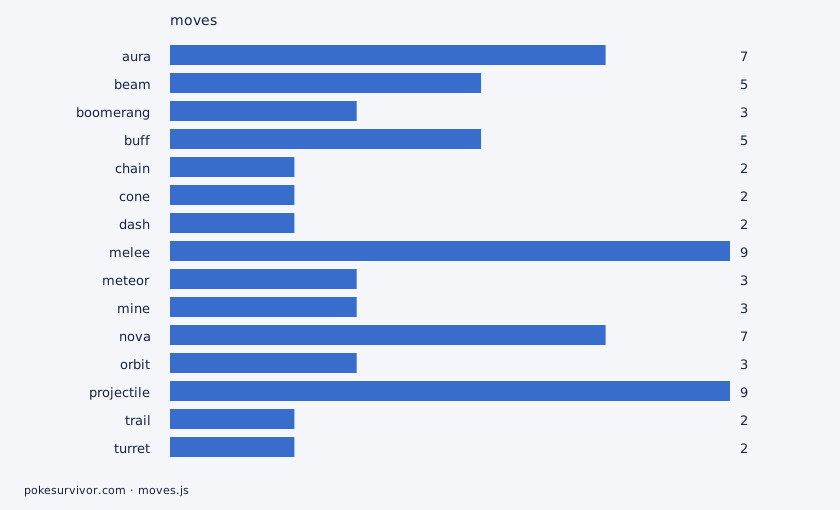
| Behavior | Base moves | How it works | Example |
|---|---|---|---|
| Projectile | 9 | Shoots projectiles toward the nearest enemy. Count and piercing upgrades change how many targets the volley can reach. | Ember |
| Melee | 9 | Hits an arc around your partner. Reach and arc upgrades change the area you can strike at close range. | Tackle |
| Dash | 2 | Crosses toward an enemy and hits along the path. Distance, width and cooldown affect how the dash covers space. | Quick Attack |
| Buff | 5 | Builds a temporary, stackable boost to your partner. It deals no direct damage and has no golden move evolution. | Swords Dance |
| Cone | 2 | Fires many short shots in a fan. A wider volley is a different coverage pattern from a single long projectile. | Bubble Beam |
| Orbit | 3 | Keeps damaging orbs circling your partner while selected. Contact with the orbit matters more than a simple cast count. | Fire Spin |
| Nova | 7 | Sends a radial burst in every direction. Projectile-count upgrades change the burst's coverage around you. | Heat Wave |
| Beam | 5 | Sends a straight beam through targets on its line. Beam length and thickness determine which enemies share the hit. | Flamethrower |
| Boomerang | 3 | Travels out toward an enemy and returns, with opportunities to hit on both parts of the trip. | Bonemerang |
| Aura | 7 | Damages enemies within a circle around your partner. Radius and hit interval change the close-range pressure. | Dazzling Gleam |
| Chain | 2 | Hits an enemy and jumps to nearby targets. Jump count and reach change how it spreads through a crowd. | Hex |
| Trail | 2 | Leaves damaging patches as you move. Patch duration and size affect the hazard left along your route. | Flame Wheel |
| Mine | 3 | Places ground hazards that burst when stepped on. Mine count, lifetime and blast radius shape the trap area. | Spikes |
| Meteor | 3 | Drops attacks onto nearby enemies with a landing warning. Count and blast radius change the affected area. | Meteor Mash |
| Turret | 2 | Leaves a temporary object that fires by itself. Placement cooldown, firing interval and duration are separate values. | Will-O-Wisp |
Select the move group that should be firing
A partner has four move slots, but only the selected active group attacks. On desktop, press 1–4 or Q/E to change the selection. Adding an attack to another slot does not make that separate slot fire alongside the current one. Check which group is selected before concluding that a newly learned attack is weak or inactive.
Bonded moves are the exception to thinking of a slot as one attack: a bonded group holds up to four moves, occupies one slot and fires its members together, each with its own cooldown. Selection still operates on the group. A buff can therefore contribute differently when it shares an active group with attacks than when you select a separate support slot.
Choice Band increases damage but blocks switching away from an existing active group. When deciding whether to equip it, inspect the group you will be committing to. Held items modify your current run; compare attacks using their base values before adding your equipped item's effects.
Read the five-level track before choosing an upgrade
Each base move has a five-level track. The four upgrades are shared by behavior, but the resulting values start from that particular move's base stats. Projectile upgrades add shots, raise damage, reduce cooldown and then add another shot plus piercing. Buff upgrades instead increase the stack limit, strengthen each stack, extend duration and finally add another stack while strengthening the effect again.
Tackle illustrates why an upgrade is not always just damage. Its track starts at 16 damage with a 0.5-second cooldown; later levels raise damage, increase reach, reduce the cooldown to 0.375 seconds and expand the hit arc. Will-O-Wisp follows a turret track with a separate firing interval and an increase in simultaneous turret count. Open either record to see the exact values rather than applying one generic upgrade formula to both.
Each move's level-five values include all four earlier upgrades. These values exclude partner attack multipliers and other run modifiers. They let you answer whether the next card improves damage, coverage, contact frequency or support duration without claiming to predict complete combat output.
Meet all three evolution conditions
For an evolvable move, reach its maximum level, take its required stat card in the current run, then choose the golden evolution card when offered. The stat card can have been taken earlier in that run. Reaching level five alone does not perform the evolution automatically. Tackle needs Vigor and becomes Take Down; Ember needs Power and becomes Fire Blast; Hex needs Magnet and becomes Poltergeist.
Check the evolved attack's name and required stat card before spending level-up choices. Five buffs have no evolution: Swords Dance, Agility, Harden, Aqua Ring and Dragon Dance. They improve through level upgrades and cannot receive a golden evolution card.
Use damage and cooldown as separate clues
Damage divided by cooldown is a one-event reference ratio, not total DPS. Projectile count, repeated contact, terrain, targeting, attack geometry and status conditions all affect actual hits. An orbit, a turret and a melee arc execute differently even if their stored damage and cooldown happen to produce similar ratios. Buffs do not have damage to divide in the first place.
Start with the attack shape you need, inspect the five-level track, then check which partners can learn it. Use the type chart for offensive coverage: the game uses softened factors of ×1.6 for a single weakness, ×0.6 for resistance and ×0.3 for an immunity matchup. A dual-type defender combines the two factors and clamps the result to ×0.3–×2.4. These are additional inputs, not replacements for the move's behavior.